
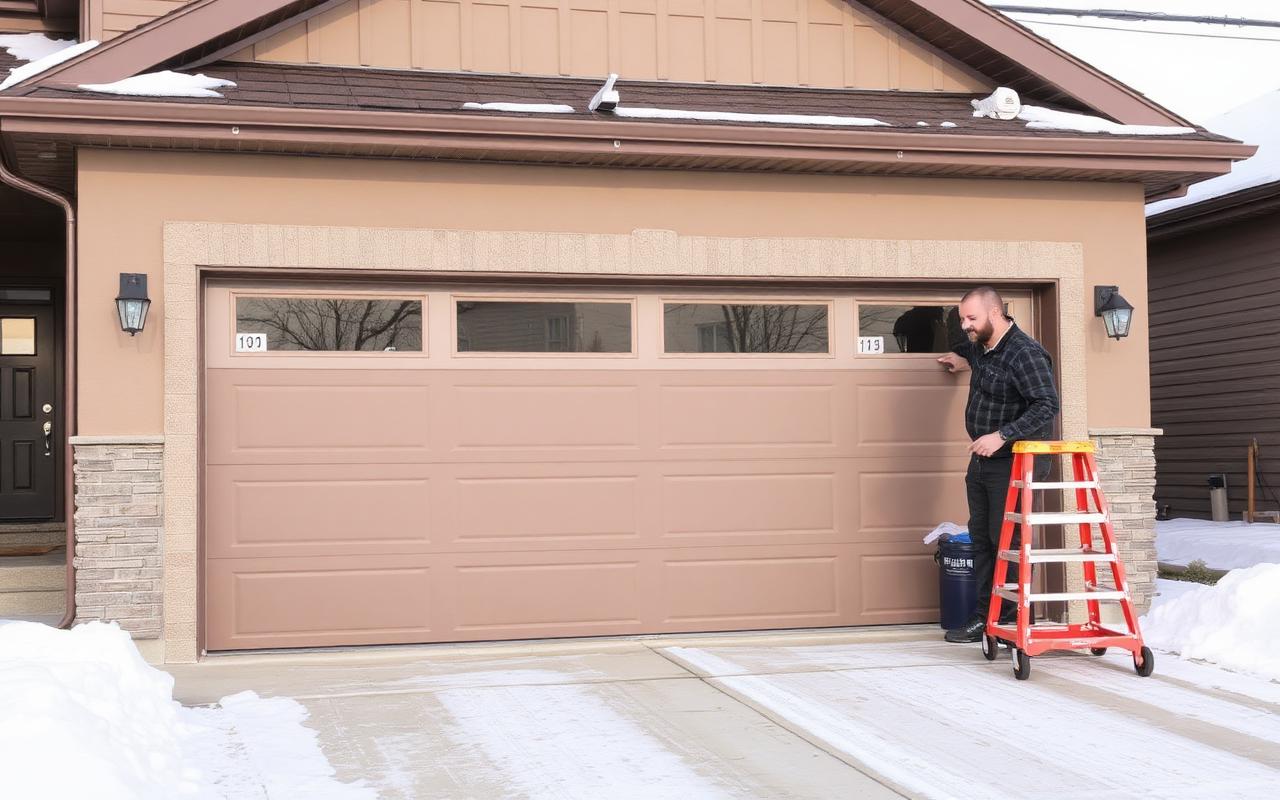
Garage Door Replacement Cost in Calgary — A Homeowner's Budgeting and Selection Guide
What a new garage door actually costs in Calgary and surrounding communities in 2026: material choices, insulation R-values that make sense for Alberta winters, hardware, labour, and where the money really goes.
Replacing a garage door is one of those purchases most homeowners make once or twice in a lifetime, so there's no built-in sense of what a fair number looks like. Quotes in the Calgary area can start under $2,000 for what sounds like the same job — and the difference usually isn't the company. It's the door.
This guide breaks down exactly what drives that range so you can walk into a quote knowing what you're buying. No sales pitch, no pressure — just the numbers and the trade-offs as we explain them to customers every week across Calgary and surrounding communities.
The short answer: typical Calgary-area starting prices
For a standard double door (16' x 7') installed, including removal and disposal of the old door, here's the realistic landscape in our market:
| Door type | Installed starting price (+ GST) |
|---|---|
| Single door (8'–9' wide), non-insulated steel | From $1,300 |
| Single door, insulated steel | From $1,700 |
| Double door (16'), non-insulated steel | From $1,900 |
| Double door, insulated steel (R-12 to R-16) | From $2,400 |
| Double door, premium insulated (R-17+, thicker gauge) | From $3,500 |
| Modern glass / aluminum full-view door | From $4,500 |
| Carriage-house / custom wood-look | From $4,000 |
| New opener installed alongside the door | From $650 |
Where the money actually goes
A replacement quote is roughly four buckets. Understanding them makes it obvious why two quotes can differ by $1,500.
Step 1
The door slab itself (50–65% of the total).
This is the biggest lever by far. Steel gauge, insulation type, panel design, hardware finish, and window inserts all live here. A 25-gauge non-insulated pan door and a 24-gauge triple-layer insulated door look similar from the street and differ by well over a thousand dollars.
Step 2
Hardware and springs (10–20%).
New tracks, rollers, hinges, cables, brackets, and correctly sized torsion springs. Springs must be matched to the new door's weight — an insulated door is meaningfully heavier than the one it replaces, so reusing old springs is not an option even if they look fine.
Step 3
Labour and removal (15–25%).
A straightforward double-door swap is a half-day job for two technicians. Removing and disposing of the old door, shimming the opening, sealing, and balancing the new door are all included in a proper quote. Add time if the header needs reframing or the opening isn't square.
Step 4
Extras (variable).
New opener, keypad, smart Wi-Fi control, side and top weatherseal, decorative hardware, custom colour. Each is optional; each is worth pricing separately rather than letting it disappear into a bundled number.
Insulation: what R-value actually makes sense in Alberta
This is the question we get most, and it's the one where marketing numbers get slippery. R-value measures resistance to heat flow — higher is better. But manufacturers quote it two different ways, and only one is honest.
- Calculated R-value measures only the insulation core at its thickest point. It's the bigger, prettier number on the brochure.
- Effective (whole-door) R-value accounts for the steel skins, the joints between sections, and thermal bridging. It's always lower — and it's what you actually experience in January.
Ask which number you're being quoted. A door advertised at 'R-18' may be closer to R-12 in practice.
| Construction | Typical R-value | Best fit in Calgary |
|---|---|---|
| Single-layer steel (no insulation) | R-0 to R-2 | Detached, unheated garage you never use in winter |
| Two-layer, polystyrene core | R-6 to R-9 | Budget upgrade; noticeably better than bare steel |
| Three-layer, polyurethane core | R-12 to R-17 | The Calgary sweet spot for an attached garage |
| Premium polyurethane, thicker section | R-17 to R-20 | Heated garage, shop, or a bonus room above |
Our practical recommendation for most Calgary and surrounding area homes: if the garage is attached to the house — and especially if there's living space above it or a shared wall with a bedroom — go with a three-layer polyurethane door in the R-12 to R-16 range. Polyurethane is foamed-in-place, so it bonds to both steel skins. That does three things at once: it insulates far better per inch than polystyrene, it makes the door dramatically more rigid (so it resists denting and warping), and it cuts road and wind noise noticeably.
If the garage is detached and unheated, the insulation argument gets much weaker. You're not saving heating dollars on a space you don't heat. Spend the money on a heavier gauge steel and good weatherseal instead, and put the savings toward a better opener.
Steel vs aluminum vs wood: choosing the material
Steel — the default, and usually the right call
Well over 90% of the doors we install in the Calgary area are steel, for good reason. Steel takes insulation well, holds paint and factory finishes through freeze-thaw cycling, resists hail better than aluminum, and costs less than every alternative. Gauge matters: lower numbers are thicker. A 24-gauge door is meaningfully more dent-resistant than a 27-gauge one, and worth the upgrade if you've got kids, hockey nets, or a tight driveway.
Watch for: rust at the bottom edge over time, especially with road salt. Rinse the bottom section a couple of times each winter and it's a non-issue.
Aluminum with glass — looks great, costs more, insulates less
Full-view aluminum-and-glass doors are the modern-architecture look, and they're genuinely striking on the right house. They're also the most expensive category, the lightest structurally, and by far the weakest thermally — even with insulated glazing, you're not approaching what a polyurethane steel door delivers. Aluminum also dents more easily than steel.
If you want this look, we'll install it and it'll look sharp — just go in knowing it's an aesthetic decision, not an energy one, and expect the garage to run colder.
Wood and wood composite — beautiful, high maintenance
Real wood carriage doors are gorgeous and expensive, and Alberta's humidity swings and UV exposure are hard on them. Plan on refinishing every few years. Composite and steel doors with wood-grain overlays get you most of the look at a fraction of the price and maintenance — this is what we recommend for nearly everyone drawn to the carriage-house style.
Repair or replace? An honest test
We repair doors for a living, and we'll tell you plainly: most doors that homeowners think need replacing don't. A broken spring, a bent track, a failed opener, or a single damaged panel are all repairs, and repairs are a small fraction of replacement cost.
Replacement genuinely makes sense when:
- Multiple panels are cracked, rusted through, or badly dented — panel replacement on an older door often costs more than it's worth, and matching discontinued panels is frequently impossible.
- The door is 20+ years old and you're facing a second or third significant repair in a short span.
- The repair estimate approaches half the cost of a new door.
- The garage is attached and uninsulated, and you're heating the house against it every winter — here the door pays part of itself back.
- You're selling. A new door is consistently one of the highest-return exterior upgrades in resale value per dollar spent.
What to ask before you sign anything
- Is the quote all-in? Removal, disposal, new springs, new hardware, weatherseal, and GST — or are those line items to come?
- What's the effective (whole-door) R-value, not the calculated core number?
- What gauge is the steel, and is the insulation polystyrene or polyurethane?
- Are the springs sized for the new door's weight, and how many cycles are they rated for?
- What's the warranty on the door, the hardware, and the labour — and are they separate?
- Is the installer employed by the company or subcontracted?
Any reputable Calgary-area installer will answer all six without hesitation. Hesitation on any of them is your signal to get a second quote.
Timeline: how long the whole thing takes
Measurement and quote takes under an hour. Standard-size steel doors in common colours are typically available within one to two weeks; custom sizes, custom colours, and full-view glass doors run three to six weeks or longer depending on the manufacturer's queue. Installation itself is usually a half day for a single door and most of a day for a double with a new opener. Your garage is only open to the elements for a couple of hours in the middle.
Thinking about a new door?
We'll come out, measure, walk you through the options that genuinely fit your garage and your winter, and give you an itemized fixed quote with no service call fee. If a repair would serve you better than a replacement, we'll say so — that's how we'd want to be treated. Call Fenix and we'll book a time that works.
Need a tech today?
Same-Day Spring Replacement Across the Greater Calgary Area
Published prices, no weekend surcharge, one-year warranty on standard repairs. Call and we'll have a technician on the way.

Door stuck? Spring snapped?