
Daylight under the closed door
Stand inside on a bright day with the door closed. Any visible light along the bottom edge means the seal is no longer contacting the floor — and whatever can get through that gap will: cold air, water, dust and pests.
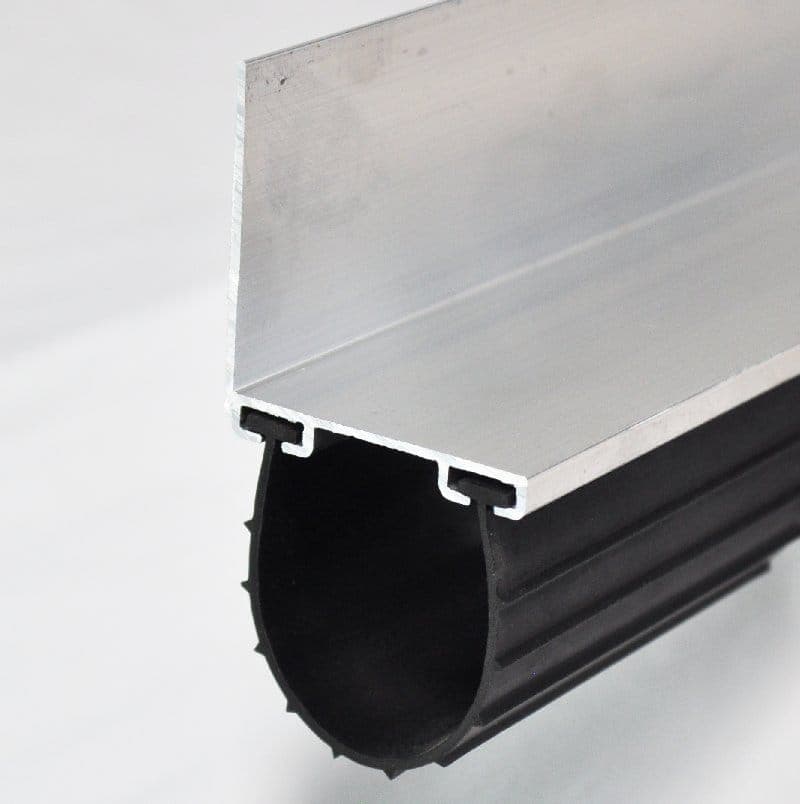
A worn garage door bottom seal lets in cold air, moisture, salt, and pests, and can freeze to the driveway. We replace the seal, and the aluminium retainer if needed, before it forces the opener into stripped gears.
Call us now for a free estimate
Is it the garage door bottom seal?
A tired garage door bottom seal is easy to spot once you know where to look — and it costs you heat and comfort every day it stays that way.
Stand inside on a bright day with the door closed. Any visible light along the bottom edge means the seal is no longer contacting the floor — and whatever can get through that gap will: cold air, water, dust and pests.
Calgary chinooks melt snow fast, and a failed seal lets that water run straight into the garage. Beyond the mess, standing water refreezes at the door line and can freeze the door shut overnight.
Garage door bottom seals dry out, crack and flatten with age and cold. Once the rubber loses its shape it can't conform to the floor — especially on older, uneven driveways — no matter how the door is adjusted.
A seal that holds moisture freezes to the concrete in cold snaps. When the opener then tries to lift a frozen door, something has to give — often the opener's drive gear. A new seal is far cheaper than a stripped opener.
If your door has frozen to the driveway, don't force it with the opener — that's how drive gears strip. Free the seal gently with warm (not boiling) water along the edge, then call us about a proper replacement.
Flat, upfront pricing
The final price is confirmed on-site before any work begins, based on your door width and whether the retainer needs replacing. There are no add-ons once the tech arrives — the price you approve is the price on the invoice, day or evening, weekday or weekend.
Every other repair we offer works the same way — a firm, written price confirmed on-site before the tech lifts a wrench.
From call to a sealed door
01
Tell us the width of the door and, if you can, whether the metal channel underneath looks damaged. It helps us bring the right profile.
02
A truck carrying the common seal profiles and retainers heads out — same-day slots are usually available.
03
The old seal is removed, the retainer channel is cleaned and inspected, and we confirm whether it can be reused before quoting any replacement.
04
The new seal is threaded, tensioned and trimmed to length so it contacts the floor evenly across the full width — including low spots in older concrete.
05
The door is cycled, the closing seal is checked against the light test, and the opener force is verified so everything works together.
Why it's worth doing right
The garage door bottom seal is the cheapest part of the door and one of the hardest working. Fitted properly, it pays for itself in comfort and avoided repairs.
Seals come in different profiles and widths, and the right one depends on your door and how even your concrete is. We carry the common Calgary profiles and fit the seal that actually closes your gap — including wider bulbs for uneven floors.
The aluminium retainer that holds the seal often outlasts several seals — but a bent or corroded channel won't grip a new one. We inspect it and replace it only if it genuinely needs replacing.
A new seal changes how the door meets the floor. We check the closing travel and opener force after fitting so the door seals tight without the safety reversal fighting the new rubber.
Our trucks carry the common seal profiles and retainers, so the job is measured, fitted and tested in a single visit — usually well under an hour.
Common questions
Not always. The aluminium retainer often outlasts several seals. We inspect the channel and replace it only if bending, corrosion or damage would prevent the new seal from fitting and holding properly.
In most cases, yes. Wider bulb-style seals are made to conform to uneven concrete, and we carry them for exactly this situation. We check your floor line on-site and fit the profile that actually closes your gap.
Yes. A seal that holds moisture freezes the door to the driveway in cold snaps, and an opener trying to lift a frozen door can strip its drive gear. Replacing a tired seal is far cheaper than repairing the opener.
It depends on your door width and whether the retainer needs replacing. We confirm the exact price on-site before any work begins, and there is no diagnostic or dispatch fee.
A straightforward seal replacement is usually finished in well under an hour, including the retainer inspection and the closing-travel check afterwards.
No. The quote is the quote — Saturday night or Tuesday afternoon, no emergency surcharge, no weekend fee, no holiday rate. We're available 7 days a week, 7am to 10pm.
What customers say
Door stuck? Spring snapped?